
The 2026 Power Quality Crisis: Why UK Manufacturers Need Voltage Optimisation
In the current volatile energy market, UK enterprises—particularly the high-output manufacturing hubs of Derby and the large-scale industrial corridors of the East Midlands- can no longer afford a passive approach to utility overheads.
As we navigate 2026, standard brokerage is often insufficient to protect the bottom line against rising non-commodity charges. These are projected to constitute nearly 60% of typical business electricity bills by year-end. For macro-businesses, the challenge has shifted from “unit price” to “power quality.”
To combat these rising costs, operations managers must address the fundamental infrastructure questions governing their site efficiency.
1. What is voltage optimisation in factories?
At its core, Voltage Optimisation (VO) is a transformer-based technology designed to regulate and stabilise the incoming electricity supply from the National Grid. In the UK, the grid often delivers power at an average of 242V (and frequently higher), yet most industrial machinery and commercial appliances are designed to operate most efficiently at 220V–230V. (Similarly, findings in a recent study conducted by Ofgem)
A voltage optimiser acts as a smart buffer between your transformer and your main distribution board. By installing this system, you ensure your facility isn’t just receiving raw power, but optimised power that eliminates chronic usage inefficiencies.
2. How does voltage optimisation reduce energy costs?
You might wonder how VO reduces costs if machines are performing the same volume of work. The answer lies in the physics of “over-voltage.” When a machine receives more voltage than required, the excess energy isn’t used for productivity; instead, it is dissipated as heat and vibration.
By reducing the incoming supply to match the ideal operating requirements of your specific machinery, you stop paying for “waste” energy. This decreases your overall kWh consumption and reduces thermal stress on electrical components, lowering both monthly bills and long-term maintenance overheads.
At Kilowatt Energy, we use advanced analytics to identify these “ghost loads” that drive up costs without adding a single penny of value to your production line.
3. How much can UK factories save in 2026?
The financial landscape has shifted. With the first year of the RIIO-3 regulatory period seeing Transmission Network Use of System (TNUoS) charges increase significantly, the ROI on optimisation has never been faster.
Typically, UK manufacturers can expect to reduce total electricity expenditure by 10% to 15%. For high-usage sites in Derby, East Midlands, these units often pay for themselves through energy savings alone within 12 to 24 months, providing a permanent shield against future grid volatility.
4. Which factory equipment benefits the most?
When considering which assets yield the highest return, we look for “voltage-dependent” loads:
Three-Phase Motors: Found in conveyors, compressors, and heavy industrial plants.
HVAC and Refrigeration: Systems that run 24/7 and are highly sensitive to over-voltage.
High-Intensity Lighting: Large-scale warehouse and floor lighting (non-LED or older LED drivers).
By stabilising the supply, you solve industrial headaches like “eddy currents” in motors, which effectively turn your machinery into expensive, unintended space heaters.
5. Does voltage optimisation affect production performance?
The reality is the opposite: it improves reliability. By providing a consistent supply, VO prevents sensitive control panels from tripping due to grid spikes and stops motors from overheating.
We have seen sites, such as Studley Wood Golf Club, stabilise their entire electrical infrastructure by resolving chronic voltage and phase imbalances. The result is a smoother operation with fewer maintenance call-outs and a significantly longer lifespan for high-value assets.
6. Is voltage optimisation suitable for all UK factories?
The short answer: it depends on your power quality. If your incoming voltage consistently exceeds 240V, you are a prime candidate for massive savings. However, factories that have already fully transitioned to modern Variable Speed Drives (VSDs) across every machine may see lower percentage gains. This is why a Forensic Energy Audit is vital.
Case Study: The £10,000 “Technical Waste” Problem
Many high-usage facilities struggle with spiralling costs despite having “competitive” rates. A recent forensic review of the premier golf club revealed that the issue was systemic electrical failure, not the tariff.
A. Harmonic Distortion (Estimated Cost: ~£4,000/year)
Monitoring showed Total Harmonic Distortion (THD) at 24%, well above the 5% industrial limit. This was caused by non-linear loads like variable-speed irrigation pumps and commercial kitchen appliances.
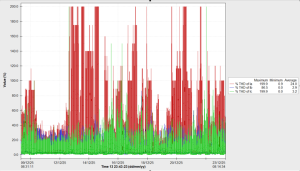
The Physics: High harmonics cause “eddy currents” in motors, wasting approximately 19,200 kWh per year.
B. Voltage Dips & “Undervoltage” Stress (Estimated Cost: ~£3,000/year)
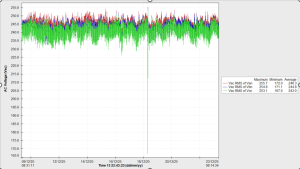
We recorded voltage drops as low as 167V–172V, well below standard operating tolerances.
The Physics: When voltage falls, motors draw higher current (amperage) to maintain output, forcing equipment to run hotter and longer.
C. Phase Imbalance (Estimated Cost: ~£2,000/year)
The site’s load was unevenly distributed across the three phases, creating “neutral currents.”
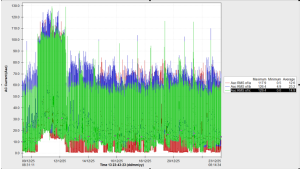
The Physics: This imbalance typically adds 1%–3% to total energy consumption through avoidable “copper losses” in the wiring.
Total Annual Impact: Between £5,000 and £10,000 in avoidable technical waste.
The Diagnosis: Why Your Meter Isn’t the Villain
Interestingly, the business owner in our case study was convinced their electricity meter was faulty. Our forensic investigation proved the meter was perfectly accurate; it was simply measuring huge amounts of wasted energy. The issue wasn’t the counting; it was the “technical leaks” within the infrastructure that no standard utility bill would ever show.
How to Avoid Technical Waste: The Remedies
Harmonic Filtration: Clean “dirty power” to protect sensitive electronics.
Voltage Optimisation (VO): Ensure your site only draws what it needs (typically 220V–230V).
Phase Balancing: Redistribute loads evenly to eliminate neutral currents.
Continuous Monitoring: Use real-time data to spot dips before they lead to equipment failure.
Stop the “Technical Leak” in Your Facility
The biggest risk to your business in 2026 isn’t just the price per unit—it’s the energy you are paying for but never actually using.
At Kilowatt Energy, based in the heart of Derby, East Midlands, we provide the forensic expertise needed to uncover these hidden costs. Whether you are a manufacturer, a macro-business, or a high-usage leisure site, our on-site technical reviews provide the data you need to reclaim your profits.
[Read our latest blog: Forensic Energy Auditing: 8 Ways Firms Save in 2026]
Contact Kilowatt Energy today for a Free Forensic Utility Review. Let’s find your missing £10,000!